Loading...
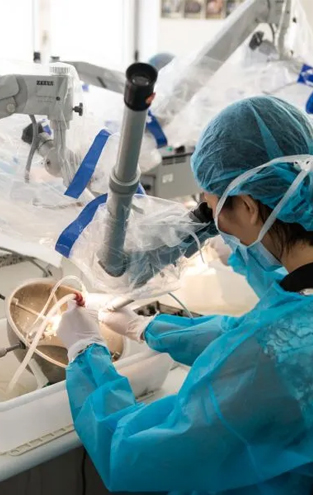
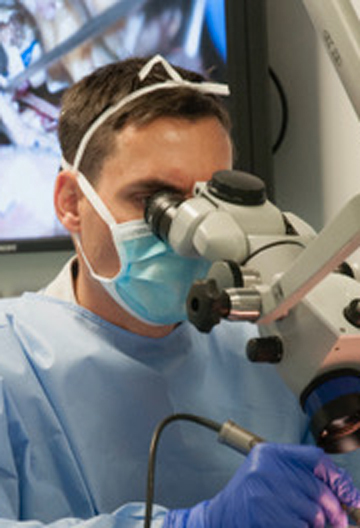

The Manchester Skull Base Surgery Course is an intensive five-day course providing advanced theoretical and practical training in approaches to the anterior, central and lateral skull base.
Designed for senior specialist registrars, hospital specialist doctors and consultants from the UK and internationally, the course combines expert-led teaching with extensive hands-on dissection using high-quality fresh frozen cadaveric specimens.
The course has a strong practical focus. Delegates have the opportunity to perform commonly used approaches to the skull base under expert supervision, developing their understanding of surgical anatomy, operative technique and the selection of the most appropriate approach for different regions of the skull base.
A multidisciplinary approach is central to the course. Teaching brings together expertise from ENT, neurosurgery and related skull base specialties, reflecting the collaborative way in which complex skull base disease is managed in specialist centres.
In association with the British Skull Base Society
The Manchester Skull Base Surgery Course combines anatomical understanding, surgical decision-making and extensive practical training across the skull base.
Familiarise yourself with the range of surgical approaches used in the management of skull base disease.
Learn how to select the best surgical approach for a given region of the skull base, taking account of anatomy, access and the individual clinical situation.
Perform the common approaches to the entire skull base using fresh cadaveric specimens under expert supervision.
Learn how multidisciplinary working between surgical specialties can optimise the care of patients with skull base disease.
The five-day Manchester Skull Base Surgery Course combines focused teaching, surgical demonstrations and extensive supervised dissection. The programme covers approaches across the anterior, central and lateral skull base, allowing delegates to progressively develop their understanding of the relevant anatomy and operative techniques.
09:00 |
Introduction |
|
09:15 |
Lecture: Selecting the right approach to the lateral skull base |
Simon Freeman |
09:30 |
Lecture: Retrosigmoid approach |
Andrew King |
09:45 |
Lecture: Translabyrinthine and retrolabyrinthine approac |
Walter Kutz |
10:00 |
Coffee |
|
10:15 |
Dissection: Retrosigmoid approach |
Side 1 (60 minutes) |
11:15 |
Dissection: IAC drilling |
Side 1 (75 minutes) |
12:30 |
Lunch |
|
13:30 |
Dissection: Retrolabyrinthine approach |
Side 2 (90 minutes) |
15:00 |
Dissection: Translabyrinthine approach |
Side 2 (150 minutes) |
17:30 |
Finish |
|
18:00 |
Lecture (Venue TBC) |
Walter Kutz |
19:30 |
Conference Dinner (King Street Townhouse) |
09:00 |
Dissection: ABI insertio |
Side 2 (45 minutes) |
10:00 |
Lecture: Transcochlear / transotic approach |
Nejc Steiner |
10:15 |
Dissection: Transcochlear / transotic approach |
Side 2 (90 minutes) |
10:45 |
Coffee |
|
11:00 |
Dissection: Transcochlear / transotic approach |
Side 2 |
12:00 |
Lunch |
|
12:45 |
Lecture: Middle fossa approach |
Simon Lloyd |
13:00 |
Dissection: Middle fossa approach |
Side 1 (60 minutes) |
14:00 |
Lecture: Combined transtentorial and Kawase approach |
Charlotte Hammerbeck-Ward |
14:15 |
Dissection: Combined transtentorial and Kawase approach |
Side 1 (90 minutes) |
15:45 |
Lecture: Far lateral approach |
Scott Rutherford |
16:00 |
Dissection: Far lateral approach |
Side 2 (90 minutes) |
17:30 |
Finish |
09:00 |
Lecture: Selecting the right approach to the anterior skull base and orbit |
|
09:15 |
Lecture: Pterional craniotomy |
Jane Halliday |
09:30 |
Dissection: Pterional craniotomy |
Side 1 (90 minutes) |
11:00 |
Coffee |
|
11:15 |
Lecture: Optic canal decompression and anterior clinoidectomy |
Scott Rutherford |
11:30 |
Dissection: Optic canal decompression and anterior clinoidectomy |
Side 1 (60 minutes) |
12:30 |
Lunch |
|
13:30 |
Lecture: Orbitozygomatic craniotomy and eyebrow craniotomy |
Omar Pathmanaban |
13:45 |
Dissection: Orbitozygomatic craniotomy |
Side 2 (120 minutes) |
15:45 |
Dissection: Eyebrow craniotomy |
Side 1 (105 minutes) |
17:30 |
Finish |
08:30 |
Lecture: Open vs endoscopic approaches to the anterior skull base |
Omar Pathmanaban |
09:00 |
Lecture: Hadad flap, sella surgery and transcribriform approach |
Archana Soni-Jaiswal |
09:15 |
Dissection: Sella surgery |
(105 minutes) |
11:00 |
Coffee |
|
11:15 |
Dissection: Transclival approach |
(105 minutes) |
13:00 |
Lunch |
|
14:00 |
Lecture: Transclival, infratemporal and transmaxillary approaches |
Raj Bhalla |
14:15 |
Dissection: Internal carotid artery dissection and cranial nerve demonstration |
(90 minutes) |
15:45 |
Coffee |
|
16:00 |
Dissection: Infratemporal fossa and transmaxillary approaches |
(90 minutes) |
17:30 |
Finish |
09:00 |
Lecture: Infratemporal fossa approaches |
Simon Freeman |
09:15 |
Dissection: Infratemporal fossa approaches A, B, C |
Side 2 (150 minutes) |
10:15 |
Coffee |
|
10:45 |
Dissection: Infratemporal fossa approaches A, B, C continued |
Side 2 |
11:45 |
Lecture: Transfacial approaches |
Nav Mani |
12:00 |
Dissection: Transfacial approaches |
(180 minutes) |
13:15 |
Lunch |
|
14:15 |
Dissection: Transfacial approaches |
|
16:00 |
Finish |
Attend as an individual delegate with your own dissection station and specimen.
Limited to 13 stations
Attend with an ENT or neurosurgery colleague and share a specimen.
This option provides an opportunity for two surgeons to work through skull base approaches together while benefiting from a reduced delegate rate.
A limited number of observer places are available for surgeons wishing to attend the teaching and observe the practical training.
6 observer places available
The delegate fee includes:
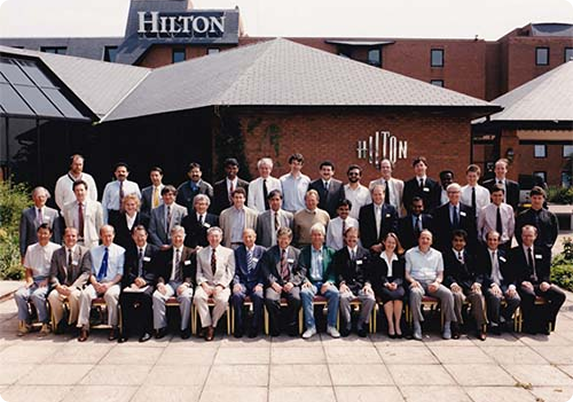
The unit has a long history of running skull base surgery courses. Our first course was run by Professor Ramsden and Mr Dutton in 1983. The course photograph from this course is shown.
Feedback from previous years courses can be viewed below
Develop your skills in anterior, central and lateral skull base surgery through five days of expert teaching and extensive hands-on cadaveric dissection.
9–13 November 2026
University of Manchester
Manchester, UK
13 Dissection Stations
5 Days Intensive Training